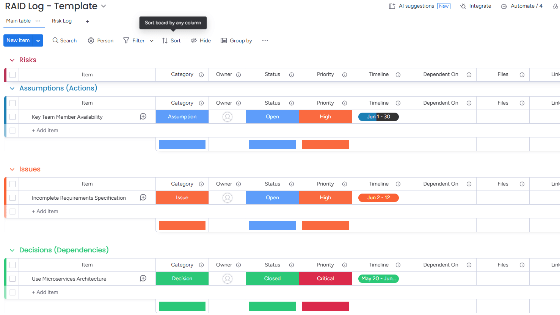
Who is this space for?
A RAID log template benefits a wide range of roles across project-driven organizations by providing a consistent, structured way to capture and manage risks, actions or assumptions, issues, and dependencies or decisions in one place. Its value lies in improving visibility, accountability, and proactive decision-making.
Beneficiaries include:
Project Managers and Program Managers
ProjectTeams and Contributors
Executives and Sponsors
Stakeholders
CrossfunctionalTeams
PMOs
What problem does it solve?
Before building this space I had multiple places to track project information and had to spend too much time communicating with stakeholders. A RAID log was also requested out in the monday.com community.
Broader organizational benefits
- Improved communication: A shared, structured format reduces misunderstandings and keeps everyone aligned
- Proactive risk management: Teams can identify and mitigate risks early rather than reacting to problems late
- Accountability and ownership: Clear assignment of actions and issues ensures follow-through
- Better decision-making: Leadership has timely, relevant information to act quickly
What are the benefits of your space?
A standard RAID log is more than a tracking tool—it is a performance enabler. By reducing inefficiencies, improving transparency, and driving accountability, it delivers measurable gains in speed, quality, and project outcomes. Organizations that standardize RAID logs position themselves to manage complexity more effectively and consistently deliver successful results.
20–40% reduction in project risk exposure
By formally identifying and tracking risks early, teams can proactively mitigate them. A standard template ensures risks are consistently assessed, prioritized, and monitored.
25% improvement in team alignment and clarity
A shared RAID log creates a “single source of truth,” reducing miscommunication and ensuring all team members understand priorities, actions, and dependencies.
Up to 40% faster reporting preparation
Standardized RAID logs make it easy to pull updates for status reports, executive briefings, and governance meetings without recreating information each time.


Newly added